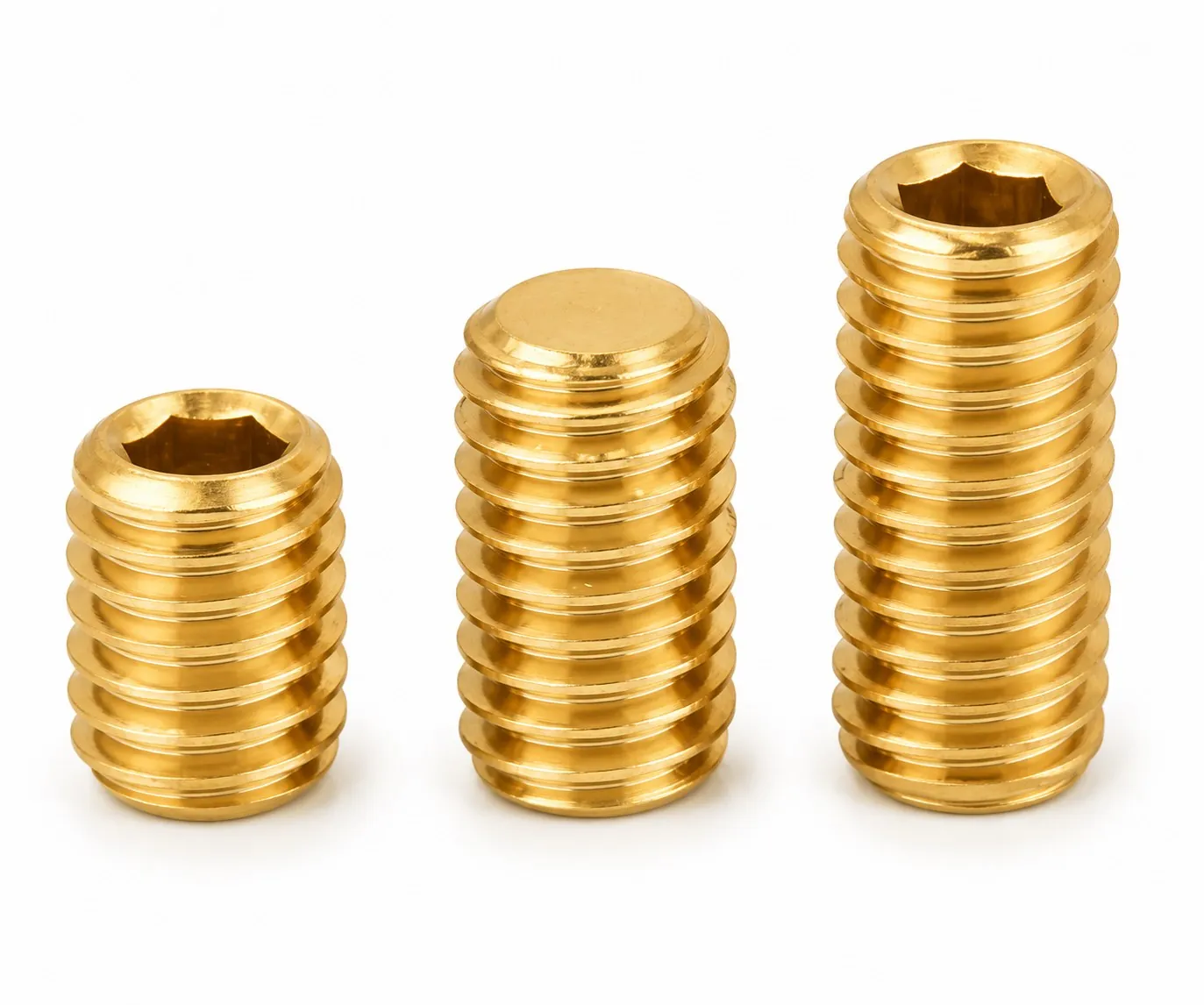
Brass socket set screws — flat, cone, dog and cup point
Standard Parts · CW617N Brass

Brass Socket Set Screws

Four DIN point types machined from CW617N (CuZn40Pb2) brass — flat, cone, dog and cup point. Hex socket drive (Allen key). M3–M16 in ISO metric thread. Non-magnetic, corrosion-resistant, spark-safe.
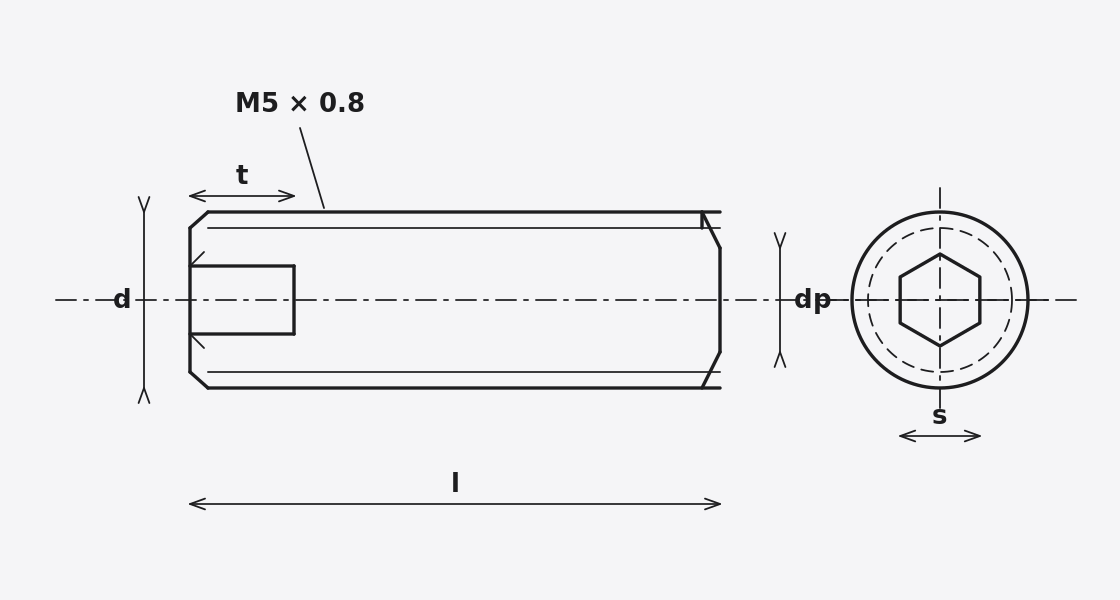
DIN 913 · ISO 4026 Brassland brass set screw DIN 913 / ISO 4026 — flat point engineering drawing showing hex socket, thread and flat tip
Flat Point — DIN 913
Flat end face. Does not mark or indent the shaft surface — preferred for precision location and where frequent adjustment is needed. Locks by friction only.
StandardDIN 913 / ISO 4026
Thread rangeM3 – M16
DriveHex socket (Allen key)
Point angleFlat (0°)
MaterialCW617N brass
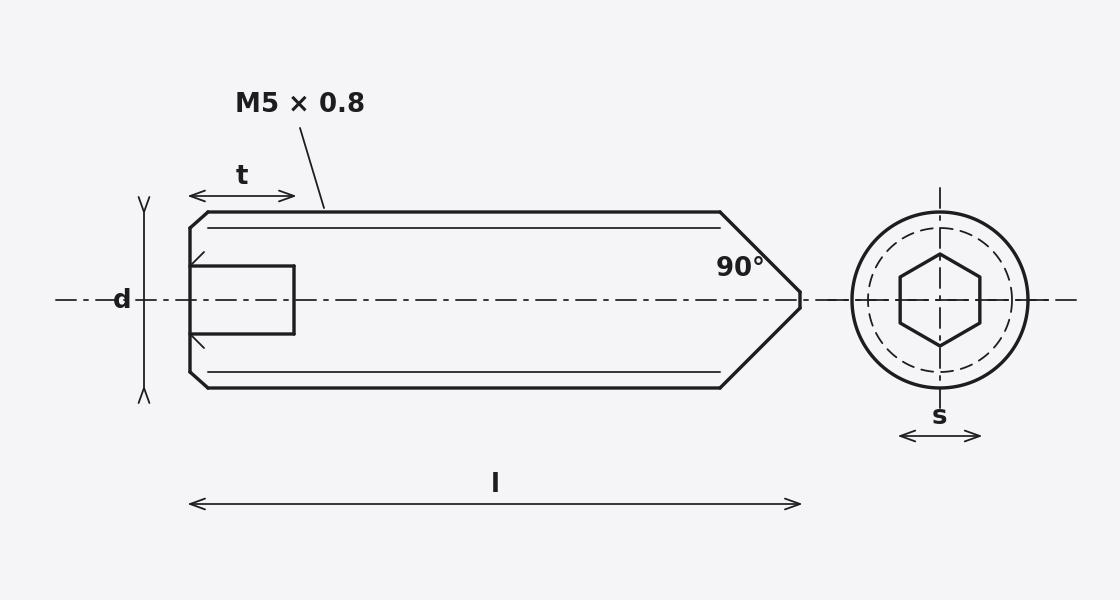
DIN 914 · ISO 4027 Brassland brass set screw DIN 914 / ISO 4027 — cone point engineering drawing showing hex socket, thread and pointed tip
Cone Point — DIN 914
90° cone point bites permanently into the shaft. Maximum holding force and vibration resistance. Suitable for high-load or high-vibration applications.
StandardDIN 914 / ISO 4027
Thread rangeM3 – M16
DriveHex socket (Allen key)
Point angle90° cone
MaterialCW617N brass
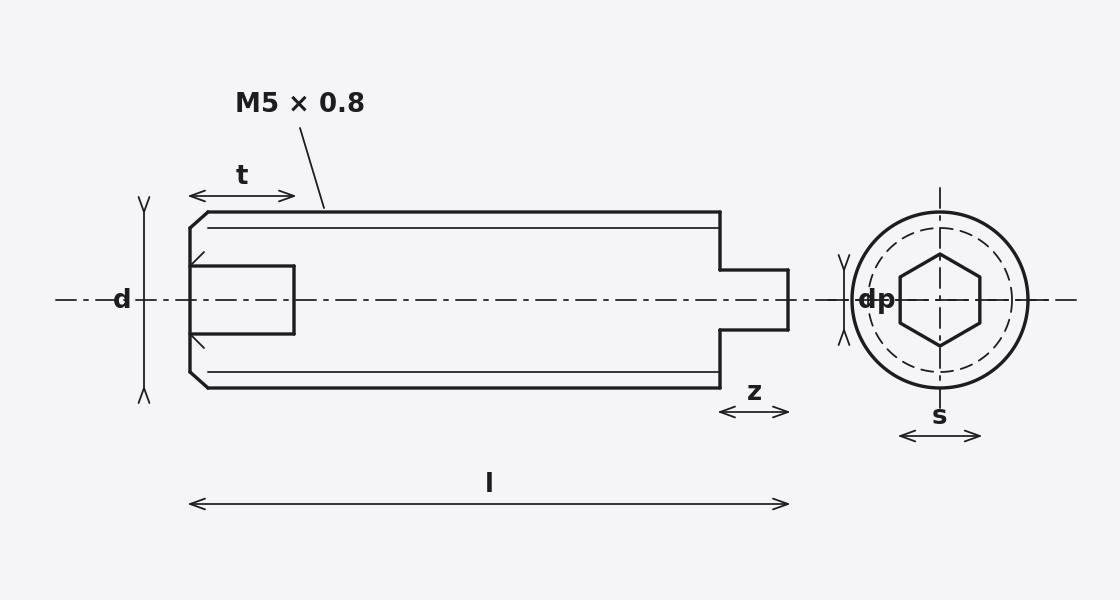
DIN 915 · ISO 4028 Brassland brass set screw DIN 915 / ISO 4028 — dog point engineering drawing showing hex socket, thread and short dog tip
Dog Point — DIN 915
Reduced-diameter cylindrical pin extends from the end. Provides positive axial location by engaging a hole or slot in the shaft — allows easy disassembly without shaft damage.
StandardDIN 915 / ISO 4028
Thread rangeM3 – M16
DriveHex socket (Allen key)
Dog dia (dp)≈ 0.5 × d
MaterialCW617N brass
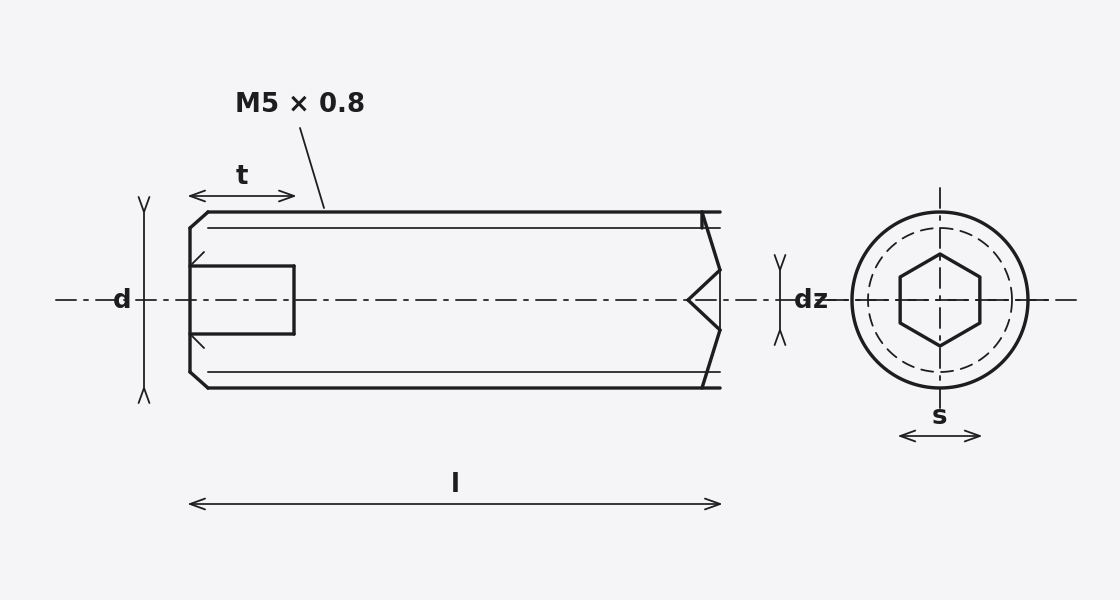
DIN 916 · ISO 4029 Brassland brass set screw DIN 916 / ISO 4029 — cup point engineering drawing showing hex socket, thread and concave cup tip
Cup Point — DIN 916
Hardened cup rim bites into the shaft surface and provides excellent holding force without deep penetration. The most widely used set screw type — good balance of grip and shaft preservation.
StandardDIN 916 / ISO 4029
Thread rangeM3 – M16
DriveHex socket (Allen key)
Cup dia (dk)≈ 0.4 × d
MaterialCW617N brass
Common Body Dimensions
All dimensions in mm · SW = hex key (Allen key) size · l = nominal length range
ThreaddSW (hex key)t (socket depth)l range
M33.01.51.23 – 16
M44.02.01.54 – 20
M55.02.52.05 – 25
M66.03.02.56 – 30
M88.04.03.08 – 40
M1010.05.04.010 – 50
M1212.06.04.812 – 60
M1616.08.06.416 – 80
Cup Point Dimensions (DIN 916)
dk = cup diameter · tk = cup depth · all in mm
Threaddk (cup Ø)tk (cup depth)
M31.20.8
M41.61.0
M52.01.25
M62.51.5
M83.52.0
M104.02.5
M125.03.0
M166.04.0
d t s l dp M5 × 0.8
Flat point — DIN 913 / ISO 4026
d t s l 90° M5 × 0.8
Cone point — DIN 914 / ISO 4027
d t s l dp z M5 × 0.8
Dog point — DIN 915 / ISO 4028
d t s l dz M5 × 0.8
Cup point — DIN 916 / ISO 4029
Alloy · CW617N (CuZn40Pb2)
Free-Cutting Brass
Machined from hexagonal CW617N brass bar to EN 12165. 100% machinability index — ideal for the tight socket tolerances required in set screws. Non-magnetic, spark-safe, corrosion-resistant.
Cu 57–59% Pb 1.6–2.5% Zn remainder
Why Brass Set Screws
Non-ferrous by design
Brass set screws are specified where steel would cause galvanic corrosion on brass, copper or aluminium shafts. Also chosen for spark-free environments, marine assemblies, and food/pharmaceutical equipment requiring non-magnetic fixings.
Non-magnetic Spark-safe RoHS compliant
What's the difference between flat, cone, dog and cup point set screws?

Flat point (DIN 913 / ISO 4026) bears on the surface without marking it — best for frequent adjustment. Cone point (DIN 914 / ISO 4027) digs in for permanent location. Dog point (DIN 915 / ISO 4028) engages a drilled hole or slot for positive positioning. Cup point (DIN 916 / ISO 4029) is the general-purpose choice, biting lightly into the shaft for good holding without a prepared seat.

What sizes and drive types are available?

Standard coverage runs M2 to M16 ISO metric and #4-40 to ¾-10 UNC, with hex socket drive on the DIN 913–916 series and slotted drive on DIN 551, 553 and 438. Custom lengths and points are made to drawing.

Why choose brass set screws over steel?

Brass set screws are non-magnetic, corrosion resistant and non-sparking, and they won’t gall stainless shafts or mar softer mating parts the way hardened steel can. They suit electrical, instrumentation and marine-adjacent applications where steel fasteners corrode or interfere.

What material are they machined from?

Set screws are machined from CW617N brass, RoHS compliant, with nickel or tin plating available on request. All production is made to order — share your DIN type, thread size and length for pricing within one business day.

Get a Quote
Ready to specify?
Share your DIN type, thread size, and required length — we'll respond within one business day.
Hex Standoffs & Spacers Brass Nuts Screw Plugs Threaded Inserts
Standards & Compliance References

Specifications this product line is built to

Brassland manufactures to the published EN, ISO and ASTM specifications below. Mill certificates per EN 10204 Type 3.1 are supplied as standard; Type 3.2 (third-party witnessed) available on request. Open any link to verify the standard directly with the publishing body.

EN 12164 / 12165 / 12167
CEN — brass rod, forging stock, profiles
DIN — German Institute for Standardization
DIN 934, 906, 908, 910, 913–916, 16903 etc.
ISO 4032 / 8765 / 7045
International fastener & thread standards
ASTM B16 / B124 / B283 / B371
North American brass/copper specs
EU RoHS 2 — 2011/65/EU
Annex III Ex 6(c) valid to 30 Jun 2027
ECHA REACH SVHC
Article 33 disclosure documentation supplied
ISO 6509-1 — DZR Test
Dezincification resistance for water grades
ISO 9001 · 14001 · 45001
Quality, environment & safety — Brassland certified
Brassland — Alloy Datasheets
CW617N, CW614N, CW602N, CW724R full data
Brassland — Standards Guide
Plain-English RoHS, REACH, DZR explainer
Brassland — Certifications
ISO 9001, RoHS, REACH compliance documents
Brassland — Compliance Hub
CMRT, CA Prop 65, SVHC declarations

Last reviewed: May 2026. All Brassland products are made to order — please confirm grade, surface finish, plating and packaging requirements at quotation stage. Standards listed above are referenced; production lots are released against the EN 10204 Type 3.1 inspection certificate accompanying each shipment.