From Our Shop Floor
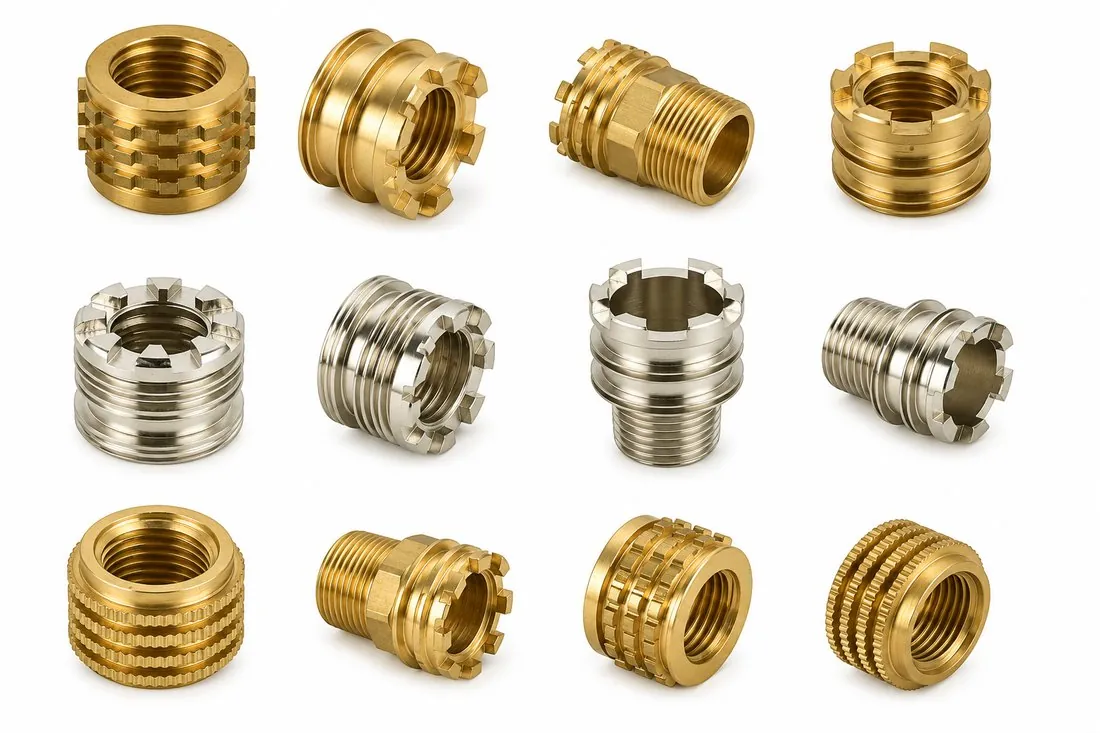
Threaded & Moulding Inserts
Brass & nickel-plated
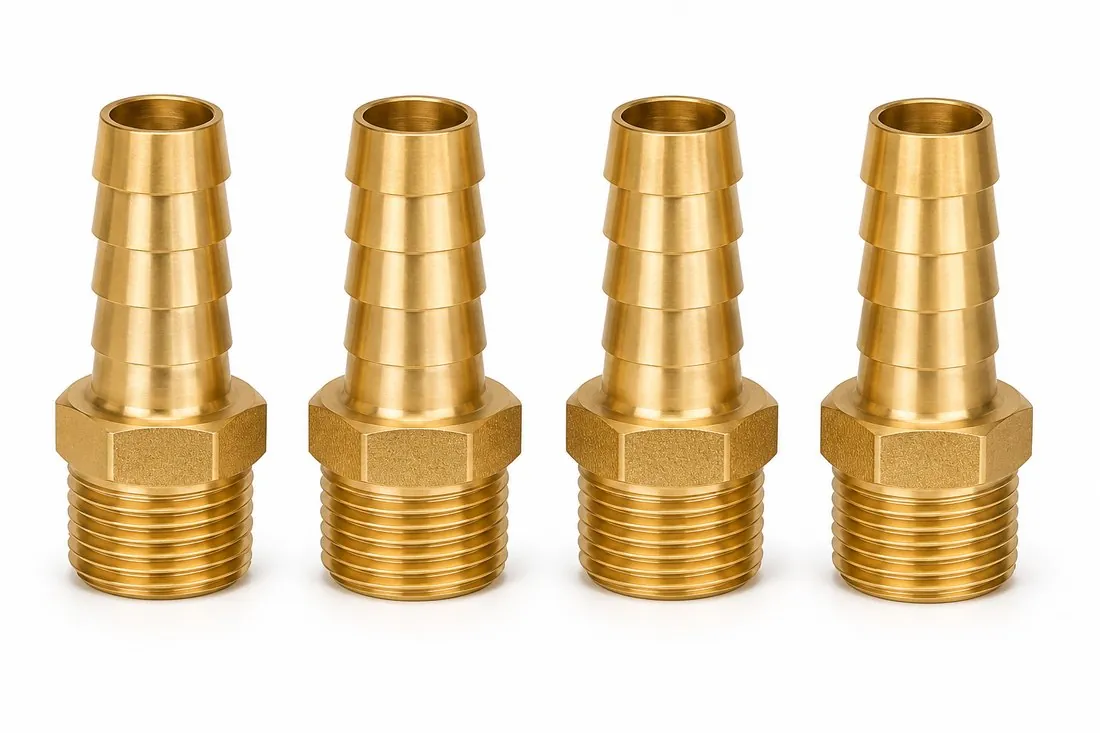
Brass Hose Barb Fittings
Made to your drawing
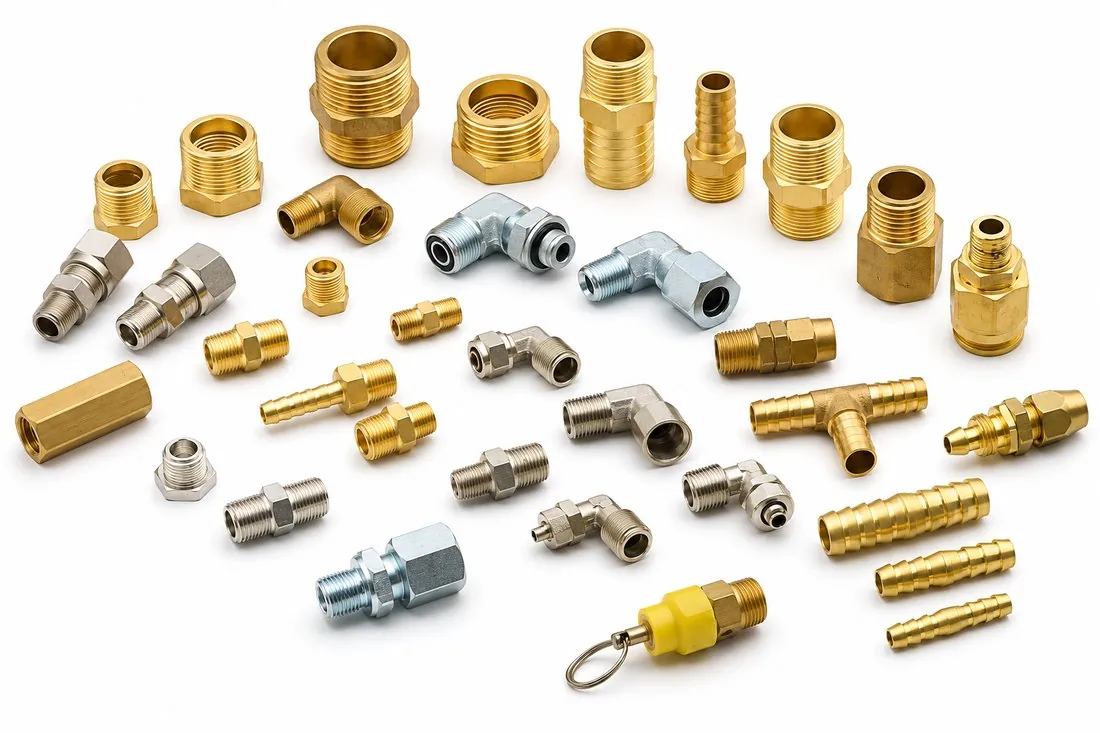
Connectors & Quick-Connect Fittings
Brass & plated steel
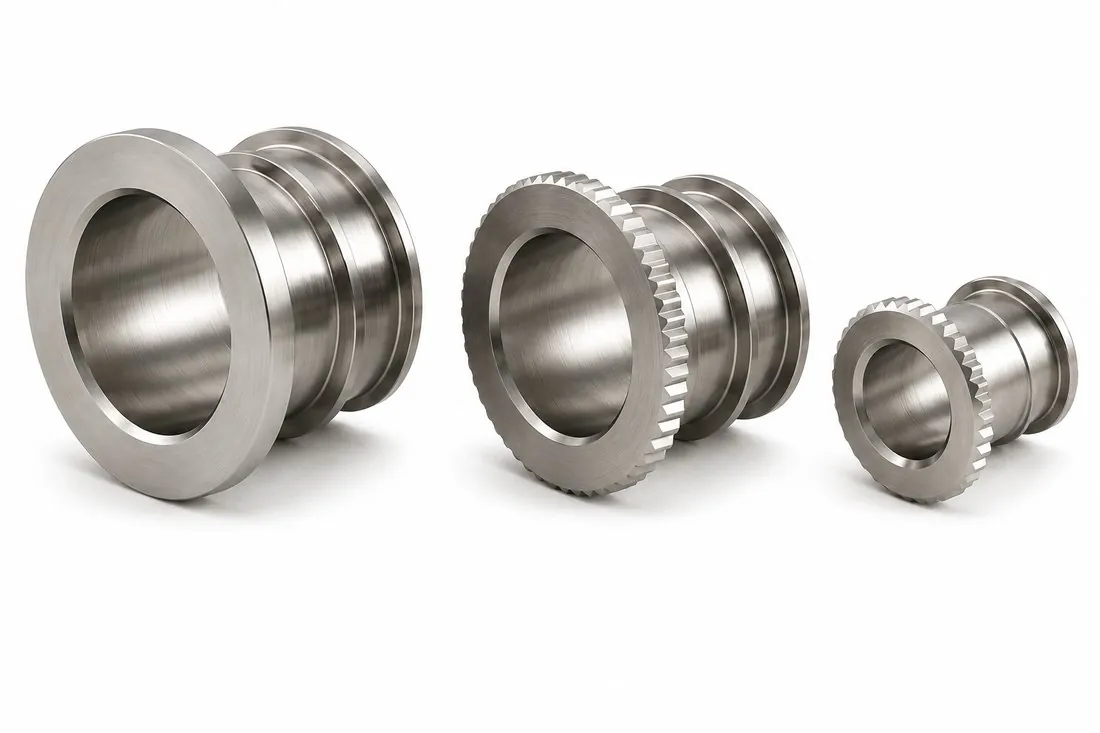
Turned Bushes & Sleeves
Knurled, made to drawing
Irrigation & Agriculture
From spray nozzle bodies to barbed hose connectors and flow regulators — we manufacture precision brass parts that keep irrigation systems reliable in any climate.
A sample of the precision brass components we turn and mill every day — finished complete and inspected in-house, then shipped to OEM and Tier-1 customers worldwide.
All parts made to your drawings. Email info [at] brassland [dot] com to request a quote.
Brassland is a precision brass-component manufacturer in Jamnagar, India, supplying turned and milled fittings to drip, sprinkler and micro-irrigation OEMs and agricultural-equipment exporters in 40+ countries. We machine spray nozzles, barbed fittings (8/12/16 mm), BSP threaded connectors, flow regulators, pressure-compensating dripper parts and manifold tees and elbows — from CW617N free-machining brass and CW602N (DZR) for potable supply lines. Every part is made to your drawing on Swiss-type and CNC machines and inspected in-house, referencing ISO 9261. ISO 9001, ISO 14001 and ISO 45001 certified. Choosing the grade? See our plumbing alloy guide →
Machined brass nozzle bodies with precision orifice bores for consistent spray patterns. M-thread and BSP thread versions.
Brass barbed connectors for 12mm–50mm hose. Single and double barb profiles. Male/female thread and plain shank types.
Reducing bushes, hex nipples, and extension pieces for irrigation distribution pipework.
Precision-bored brass flow restrictors and pressure regulators for drip and micro-irrigation systems.
Brass push-fit body inserts for poly-pipe and drip tape systems. Precision knurled and straight bodies.
Threaded brass inlet/outlet fittings and end caps for inline mesh filters and strainers.
From Our Shop Floor
Where drip and sprinkler lines connect to the drinking-water mains, the rules on lead in water-contact brass have tightened on both sides of the Atlantic. For potable-contact parts we machine dedicated low-lead and lead-free grades in place of standard leaded brass.
Standard free-machining brass such as CW617N carries roughly 2–3% lead to give clean cutting and good chip control. That lead is what newer drinking-water rules restrict on any surface the water touches.
In North America, the Safe Drinking Water Act — as amended by the Reduction of Lead in Drinking Water Act, in force since 2014 — defines "lead-free" as a weighted average of no more than 0.25% lead across all wetted surfaces. Lead content is verified to NSF/ANSI 372, while NSF/ANSI 61 covers how much may migrate into the water.
In Europe, Drinking Water Directive (EU) 2020/2184 lowers the lead limit in water toward 5 µg/L and introduces EU positive lists of accepted materials (building on the 4MS common composition list), which restrict water-contact alloys to around 0.1% lead — stricter than the North American limit.
CuZn21Si3P. Effectively lead-free, with high strength (~500 MPa) and excellent machinability — well suited to pressure-bearing potable fittings and PPR-type connectors.
Lead held to ≤0.1% with arsenic added for dezincification resistance. Suited to aggressive, hard or chlorinated potable supplies and buried fittings.
A reduced-lead alternative to CW617N for general potable-contact parts where DZR is not required but lead limits still apply.
We machine these grades to your drawing and supply EN 10204 Type 3.1 mill certificates for the material. Brassland is certified to ISO 9001, 14001 and 45001; product-level potable approvals — NSF/ANSI 61 & 372, WRAS, or EU positive-list / 4MS acceptance — are specific to the finished component and are arranged by the buyer. Tell us your destination market at quotation and we will match the right grade.
Brassland manufactures to the published EN, ISO and ASTM specifications below. Mill certificates per EN 10204 Type 3.1 are supplied as standard; Type 3.2 (third-party witnessed) available on request. Open any link to verify the standard directly with the publishing body.
Last reviewed: June 2026. All Brassland products are made to order — please confirm grade, surface finish, plating and packaging requirements at quotation stage. Standards listed above are referenced; production lots are released against the EN 10204 Type 3.1 inspection certificate accompanying each shipment.