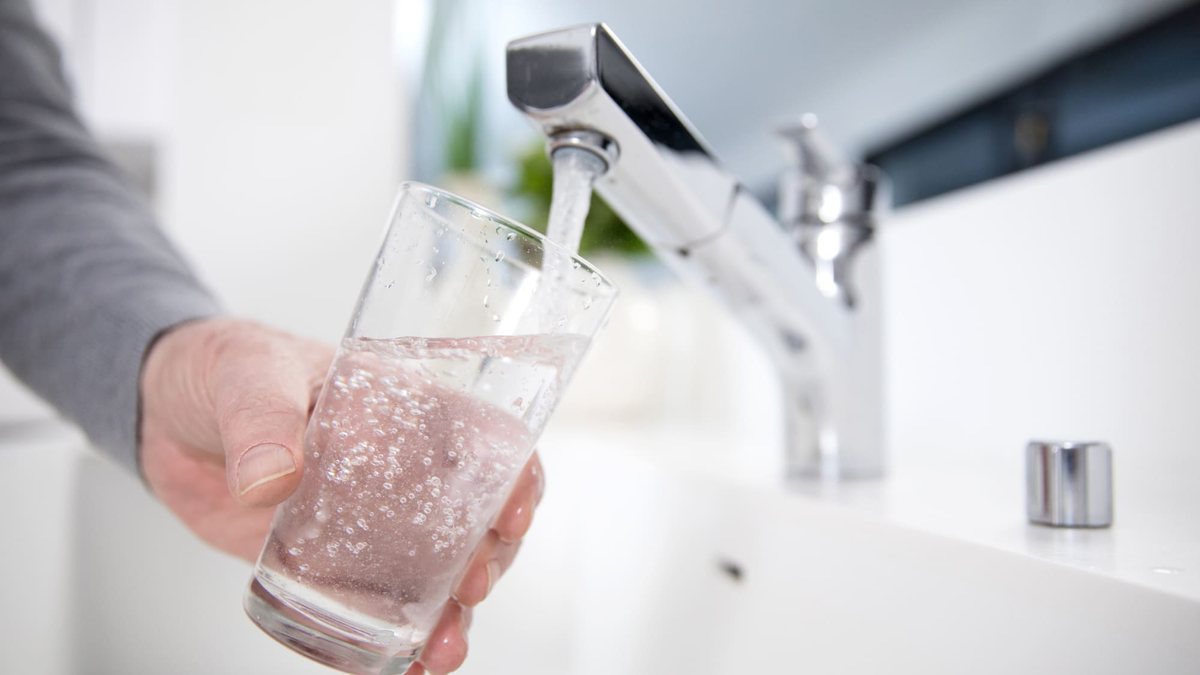
Built for potable water
Specified for water people drink
From tap cartridges to plumbing fittings and irrigation bodies, lead-free brass keeps lead out of the water path while staying fully machinable.
Send your drawing →Standard free-machining brass carries 2–3.7% lead as a chip-breaker. For drinking-water and RoHS-critical work that lead has to come out. Under the US Safe Drinking Water Act (and NSF/ANSI 372) a part is “lead-free” when the lead averaged across its wetted surfaces is no more than 0.25%. RoHS separately restricts lead to 0.1% in homogeneous materials, with copper alloys covered by Exemption 6(c).
Brass reaches those limits three ways — and Brassland machines all three:
Pick by machinability, strength and how the part is made. Click any grade for its full datasheet.
| Grade | Type | Lead (Pb) | Machinability* | Best for |
|---|---|---|---|---|
| C69300 | Silicon brass (CuZn21Si3P) | ≤0.09% | ~80% | Highest strength + intrinsic DZR — potable water |
| CW724R | Silicon brass (EN twin of C69300) | ≤0.1% | ~80% | EN markets — same metallurgy, EN certificate |
| C6802 | Bismuth brass | ≤0.10% | ~90% | Closest drop-in for leaded free-cutting brass |
| C27450 | Low-lead yellow brass | ≤0.25% | ~70% | Economical low-lead — meets the NSF 372 limit |
*Machinability rated against C36000 free-cutting brass = 100%.
CuZn21Si3P. The high-performance lead-free choice: highest strength in the library, intrinsic dezincification resistance, ~80% machinability and NSF/ANSI 372. C69300 (UNS) and CW724R (EN) are the same alloy under two designations.
Bismuth replaces lead as the chip-breaker, so C6802 machines closest to traditional leaded brass (~90%) while staying lead-free — the simplest swap for high-volume CNC and Swiss-turned parts.
Most parts are converted from C36000 / CW614N leaded brass. Here is what actually changes.
| Property | Leaded (C36000 / CW614N) | Lead-free |
|---|---|---|
| Lead content | 2–3.7% | ≤0.25% (wetted) |
| Machinability | 100% (benchmark) | ~70–90% |
| Strength | Moderate | Equal to higher (silicon) |
| Potable-water use | Restricted | Compliant material |
| RoHS basis | Exemption 6(c) | Inherently low-lead |
| Relative price | Baseline | Modest premium |
Bismuth brass C6802 is the closest drop-in; silicon brass C69300 adds strength and dezincification resistance. Send an existing leaded-brass drawing and we will advise the best lead-free substitute.
Lead limits for drinking-water contact are written into law across three continents. Lead-free brass clears them at the material level.
Brassland supplies the lead-free material, machined to your drawing with an EN 10204 3.1 certificate. Product-level approvals and certification — NSF 61, WRAS, ACS, WaterMark, DVGW — are performed on the finished product and are the buyer’s responsibility. Background: our RoHS 2027 deadline guide and drinking-water safety explainer.
They solve different problems. Lead-free is about how much lead the alloy contains — a health and regulatory limit. DZR is about resisting dezincification corrosion in aggressive water. Some grades are both: the silicon brasses C69300 / CW724R are lead-free and intrinsically DZR. But our leaded DZR grades CW602N and CW625N are dezincification-resistant while still carrying ~1.5–2% lead, so they are not lead-free. If your specification calls for both, choose a silicon brass.
We machine lead-free silicon, bismuth and low-lead brass every day on sliding-head and CNC turning centres in Jamnagar — tuning feeds, tooling and chip control for each alloy. Every lot ships with material traceability and an EN 10204 3.1 certificate, verified by optical-emission spectrometer. Quality system: ISO 9001, ISO 14001 and ISO 45001 (DQS certified). New to lead-free? Start with the alloy selection guide.
Lead-free brass is brass in which lead has been replaced by silicon or bismuth, or held very low, so the lead averaged across the part’s wetted surfaces is no more than 0.25% — the limit the US Safe Drinking Water Act and NSF/ANSI 372 define as “lead-free.” The common grades are silicon brass (C69300 / CW724R), bismuth brass (C6802) and low-lead yellow brass (C27450).
The silicon brasses C69300 and CW724R are the strongest choice — they meet the NSF/ANSI 372 lead-free limit and are intrinsically dezincification-resistant, so they suit potable-water fittings and valves. Bismuth brass C6802 is the easiest to machine; C27450 is the economical low-lead option. End-product approvals (NSF 61, WRAS, KTW) attach to the finished product and are held by the product maker — Brassland machines components to your approved drawing.
Close. Against the C36000 free-cutting benchmark (100%), bismuth brass runs about 90%, silicon brass about 80% and low-lead yellow brass about 70%. They are harder and produce different chips than leaded brass, so feeds, speeds and tooling are tuned accordingly. Brassland machines all of them on sliding-head and CNC turning machines.
A modest premium. The lead-free alloys cost a little more than leaded free-machining brass and machine a little slower, so piece price carries a small premium — usually outweighed by market access and avoiding the RoHS Exemption 6(c) review. Bismuth brass C6802 keeps the premium smallest because it machines closest to leaded brass.
Often, yes — dimensions and threads are unchanged, so the drawing usually stays the same. Bismuth brass C6802 is the closest match to leaded free-machining brass; silicon brass C69300 / CW724R is harder and stronger, so cycle parameters are re-optimised. Send your leaded-brass drawing and we will recommend the substitute and confirm cycle time.
Lead-free describes the lead content (a health limit); DZR describes resistance to dezincification corrosion. They are independent. Silicon brasses are both lead-free and DZR, but the leaded DZR grades CW602N and CW625N resist dezincification while still containing about 1.5–2% lead, so they are not lead-free. If you need both properties, specify a silicon brass.
Silicon, bismuth or low-lead — turned and forged to your drawing with an EN 10204 3.1 certificate. ISO 9001 / 14001 / 45001. Quote within 24 hours.
Request a QuoteThe lead-free definitions, alloy properties and standards on this page are cross-referenced against the publishers below. For procurement specification, always reference the current published edition of each standard.
Last reviewed: June 2026. Regulatory limits and EN/ISO/ASTM standards are updated periodically; for safety-critical or contract-critical applications, always verify against the current published edition. Brassland supplies components to the buyer's approved drawing with an EN 10204 Type 3.1 mill certificate.
Brassland manufactures brass turned parts and CNC machined components to your drawing in Jamnagar, India, including precision turned brass components on 28+ Swiss-type lathes, with an EN 10204 3.1 certificate on every shipment.