Process Guide 03

Hot-Forged
Brass

Near-net-shape brass forging at 600–750 °C for valve bodies, manifolds and high-integrity pressure parts — managed to our dies, then machined and finished in-house.

600–750 °C forging range Near-net shape Machined & finished in-house
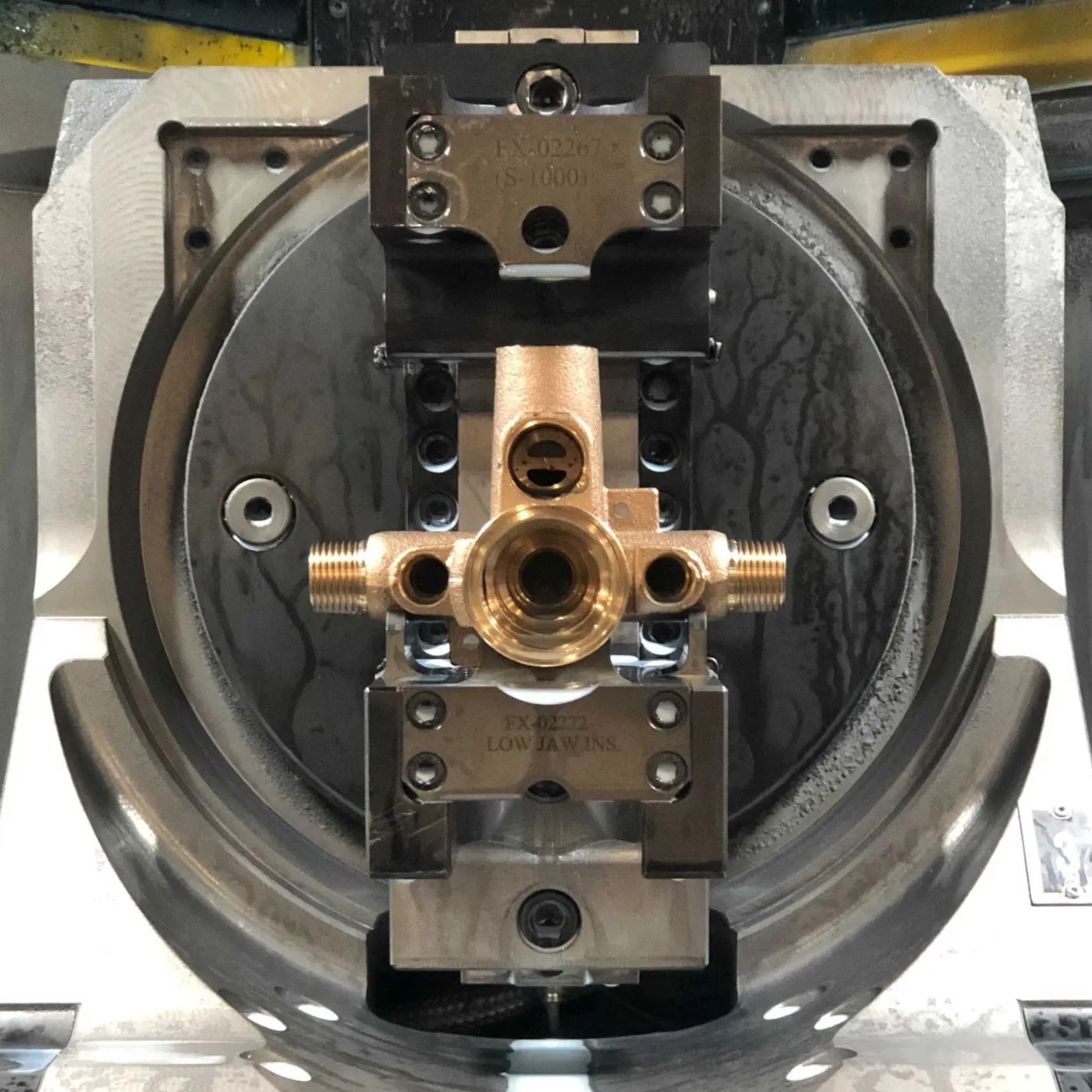
Forged brass fitting clamped in a CNC chuck for machining at Brassland
How Brassland Delivers Forgings

Managed Forging — Machined & Finished In-House

Hot forging is a complementary process to our core CNC turning — not our primary capability. You still get one accountable supplier for the whole part:

  • ✓  We own the part design, the forging dies and the quality plan
  • ✓  Forging is produced by a dedicated specialist partner, built to our dies
  • ✓  Brass only — we do not forge copper or aluminium
  • ✓  All post-forge CNC machining, finishing & inspection done in-house
Most parts are better turned.

For cylindrical and small precision parts, CNC turning or Swiss turning from bar is usually faster and lower cost than forging.

CNC Machining →Swiss Turning →
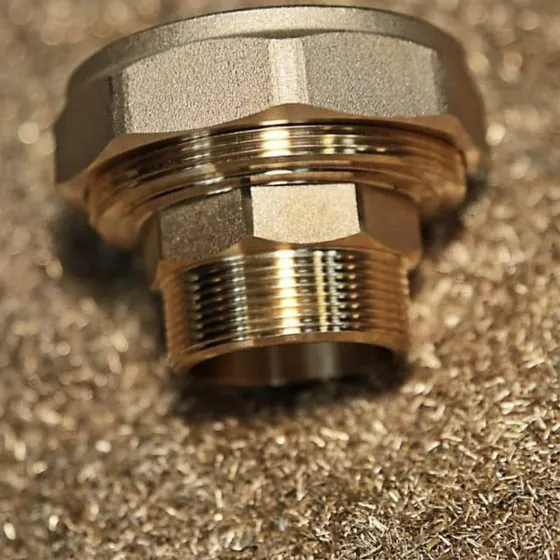
Forged brass tank connector with hex and thread
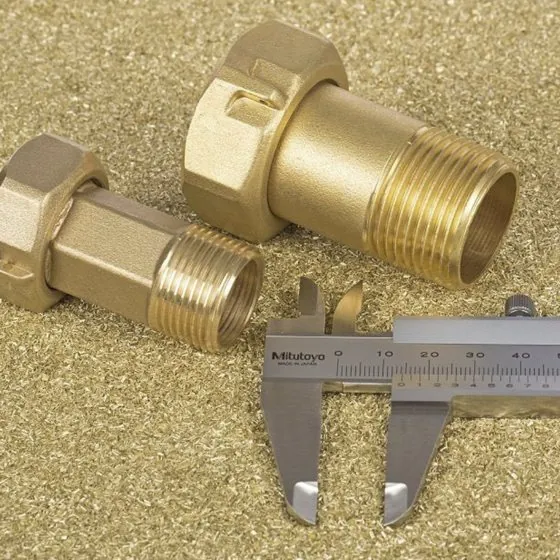
Forged brass union fittings being measured
Forged brass flanged fittings
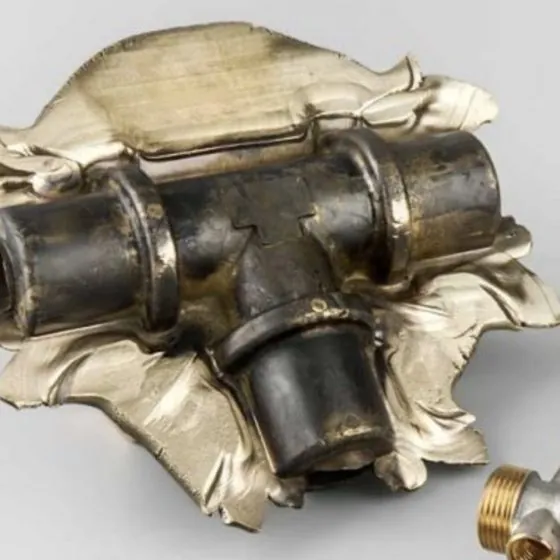
Hot-forged brass tee with flash before trimming
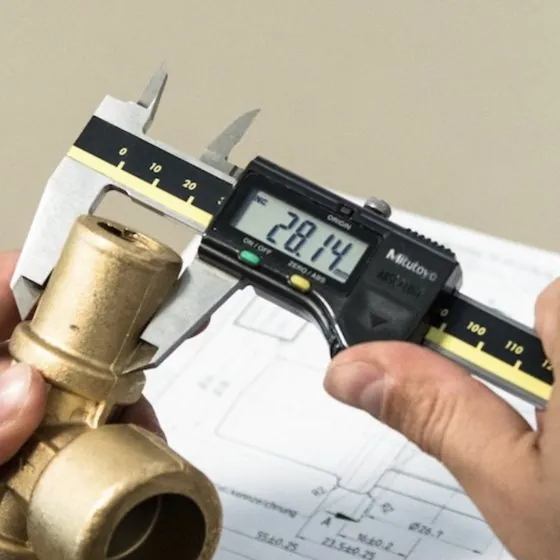
Forged brass fitting measured with a digital caliper
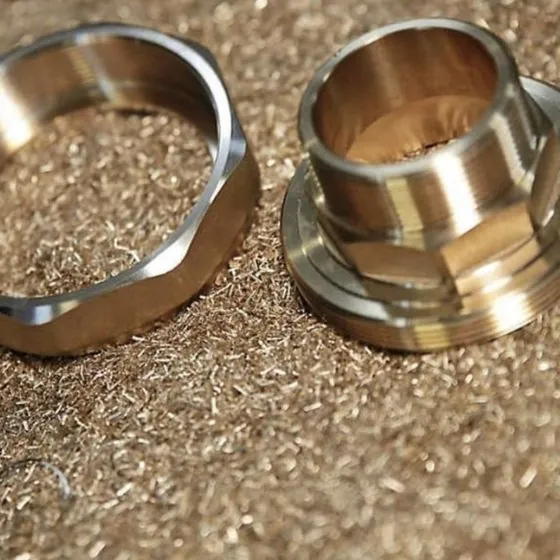
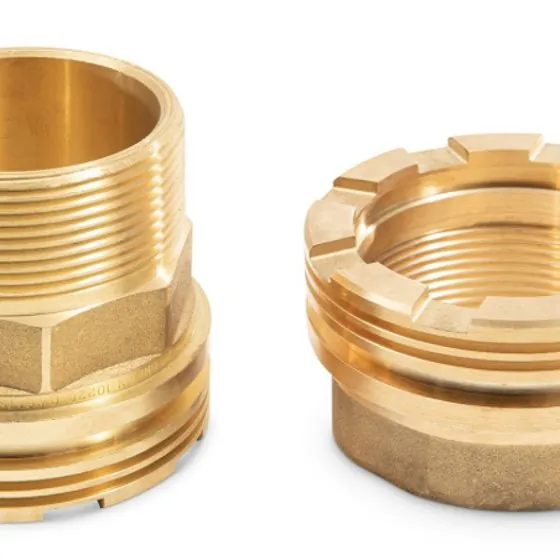
Forged brass threaded hex fitting and ring nut
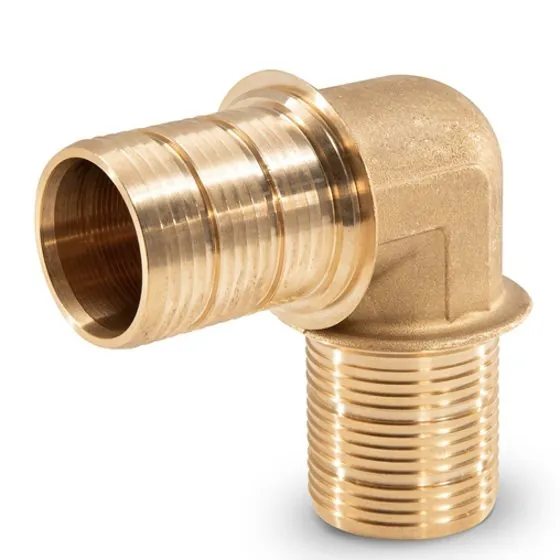
Forged brass elbow with hose barb
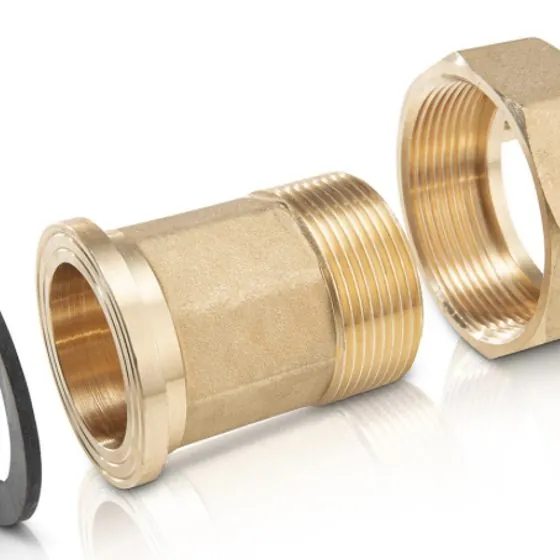
Forged brass union coupling with nut
Why Hot Forge Brass?
600–750
°C brass forging range
0
internal voids vs cast porosity
15–30%
higher fatigue strength — grain flow
85–95%
material yield (near-net shape)

Above roughly 600 °C, leaded brass (CW617N) becomes highly plastic and flows to fill the die cavity under 1,000–5,000 tonnes of press force. Forging works the metal rather than cutting it: micro-porosity in the billet is closed, density rises, and the grain structure flows continuously around the part contour instead of being severed by a tool. That directional grain gives forged valve bodies and pressure fittings roughly 15–30% higher fatigue and burst strength than the same part cut from bar.

Because the blank is near-net shape, 85–95% of the material ends up in the part (versus 40–70% when turning from solid), and only the sealing faces, threads and bores need CNC finishing. The temperature window is critical: too cold and the die will not fill and cracks initiate; above ~800 °C grain growth and hot-shortness degrade the part. Lead in CW617N (1.6–2.5%) acts as a hot lubricant, easing die fill and extending die life.

Alloy Selection

Hot Forging Alloy Guide

AlloyHot ForgingForging Temp.Lead-FreeBest For
CW617N Excellent 620–720°C Pb 1.6–2.5% Valve bodies, plumbing fittings, complex manifolds — the primary forging grade worldwide
C37700 Excellent 620–720°C Pb 1.5–2.5% US-spec forgings (ASTM B283) — the North American forging standard, EN twin CW612N
CW614N Excellent 610–720°C Pb 2.5–3.5% High-precision forgings where post-forge CNC finish quality is critical
CW724R Good 700–780°C ✓ RoHS Free Lead-free valve bodies and fittings; DZR + RoHS required
CW510L Good 680–760°C ✓ RoHS Free Lead-free hot forging where RoHS required but DZR not needed; highest-Zn lead-free
CuZn40 Good 680–750°C ✓ RoHS Free Alpha-beta duplex; good hot-workability; architectural / structural hot-extrusion
CW625N Moderate 630–720°C Pb 1.5–2.5% Sometimes forged for plumbing fittings; higher Cu gives slightly less hot-ductility
CuZn37 Not recommended N/A ✓ RoHS Free Alpha-phase only — insufficient hot-ductility for closed die forging
Process Sequence

Hot Forge → CNC: The Complete Route

1
Billet cutting: Bar or rod stock cut to precise weight — billet weight determines flash and fill quality. Over/under-weight billets cause underfill or excessive flash.
2
Induction heating: Billet heated to 620–750°C in induction furnace. Temperature consistency critical — too cold → underfill, cracking. Too hot → grain growth, excessive flash, scale.
3
Closed die forging: Hot billet pressed into closed die at 1,000–5,000 tonnes press force. Brass flows to fill die cavity; excess material flows into flash gutter.
4
Flash trimming: Flash (excess material) trimmed in trimming die while part is still warm. Flash is 100% recyclable back to billet material.
5
Shot blasting / pickling: Surface oxide scale removed by shot blasting or acid pickling (dilute HNO₃/H₂SO₄). This is important before CNC as scale is hard and damages cutting tools.
6
CNC finish machining: All critical dimensions, threads, and sealing surfaces machined to final tolerances. Forged near-net shape minimises stock removal.
7
Inspection & certification: Dimensional inspection (CMM or gauging), visual inspection, pressure test if required. EN 10204 3.1 certificate issued.
Why Lead Helps Forging

CW617N — The Dominant Forging Grade

Lead in CW617N (1.6–2.5%) acts as an internal lubricant at forging temperatures, allowing the brass to flow smoothly into complex die cavities. This improves die fill, reduces forging pressure, and extends die life.

CW617N has been the standard brass forging grade globally for decades — its combination of excellent hot workability AND excellent machinability for post-forge CNC finishing makes it uniquely dual-purpose.

Lead-Free Forging

CW724R & CW510L

Lead-free forging is more challenging but well-established for CW724R and CW510L. These alloys require slightly higher forging temperatures and greater press tonnage to achieve equivalent die fill.

CW724R forgings are used for lead-free DZR valve bodies — the forging process is proven in European markets where both DZR certification and lead-free are mandatory.

Die lubricant selection is more critical for lead-free forging — water-based graphite lubricants are standard. Graphite-free lubricants available for cleaner production environments.
Hot-Forged Brass

Valve bodies. Manifolds. Precision forgings.

Brassland manages closed-die brass forging through a dedicated forging partner — built to our die designs and quality plan — in CW617N, CW724R and other grades. We machine, finish and inspect every forged part in-house in Jamnagar.

Discuss Your Forging CW617N Datasheet
← Previous
Swiss Turning
Small diameter, high precision
↑ Back to
Manufacturing Hub
All 3 processes
Forging Engineering

What Makes a Brass Forging Work

The detail behind a sound forging — what we specify to our forging partner and verify on the machined part.

Die design

H13/H21 tool-steel dies with correct draft, generous radii and a controlled flash land — for EN 12420 tolerance and long die life.

Lubricant

Graphite or graphite-free synthetic lubricant — graphite-free where WRAS or food-contact parts cannot carry carbon residue.

Flash trimming

Flash trimmed hot (or cold for delicate parts) before CNC finishing; the trimmed brass is recycled.

Stress relief

Stress-relief anneal (250–300°C) for ammonia-exposed or fatigue-loaded parts to prevent season cracking.

Frequently Asked Questions

Hot forging at Brassland — common questions

Does Brassland forge in-house?

Brass hot forging is carried out by qualified partner forges near our Jamnagar facility, working exclusively in brass; all finish machining, thread cutting and quality inspection then happen in-house at Brassland under ISO 9001, 14001 and 45001. We do not offer casting.

When is hot forging better than machining from bar?

Forging wins when the part is large relative to bar stock, has a non-round body, or needs the strength and pressure-tightness of an unbroken grain flow — valve and fitting bodies, manifolds, flange parts. Machining from bar wins on smaller round parts and tighter as-machined tolerances. Many parts combine both: forged blank, CNC-finished features.

Which alloys are hot forged?

CW617N (CuZn40Pb2) is the standard forging brass; lead-free CW510L (CuZn42) is used where regulations require it. Forging stock is specified per EN 12165, with EN 10204 Type 3.1 certificates per lot.

What tolerances apply to forged parts?

As-forged dimensions follow EN 12420 forging tolerances; functional features are then CNC machined to the drawing — typically ±0.01 mm capability on machined diameters. Send your drawing and we’ll mark which features are forged and which are machined.

Sources & References

Verified manufacturing references

Forging, alloy and tolerance guidance on this page is drawn from the standards bodies and references below. For production-critical work, validate against the relevant standard and your material supplier.

CEN — EN 12420 & EN 12165
Brass forgings & forging stock standards
European Copper Institute
Wrought copper alloys — hot-working & forging properties
ISO 9001:2015
Quality management system — Brassland certified
Brassland — Alloy Datasheets
Per-alloy properties incl. forging grades
Brassland — Standards Guide
EN, ISO and ASTM standards explainer

Last reviewed: June 2026. Values are typical for hot-forged leaded brass (CW617N) finished by CNC; validate critical features via first-article inspection (FAI) before scale production. Forging is produced by Brassland's dedicated forging partner to our dies and quality plan.